 Deutsch
 Français
 Italiano
 Español
 Nederlands





Leadership
19.11.2026
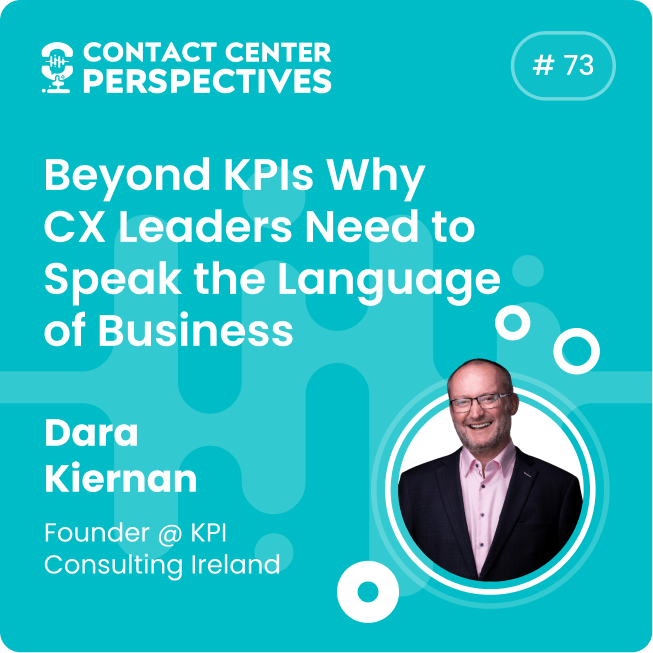
In this episode, Dara Kiernan, founder of KPI Services Limited, explores why…
 Episode 73
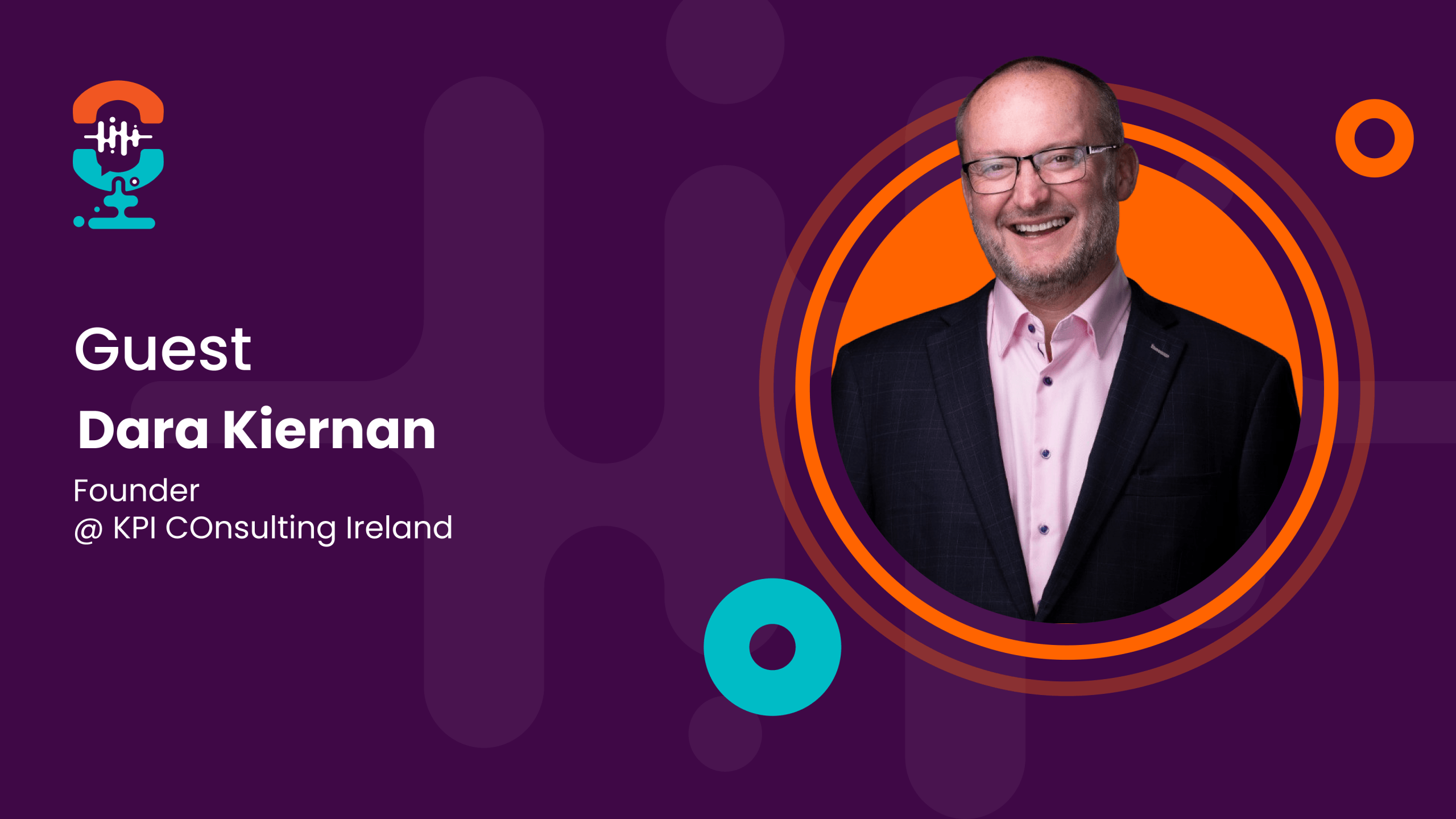


In this episode, Dara Kiernan, founder of KPI Services Limited, explores why CX leaders need to think beyond KPIs and speak the language of business. He shares insights on aligning customer experience with business goals, the importance of empathy and human connection, and how leadership, feedback, and cross-functional collaboration drive better performance.


“Most organizations don't have a KPI problem. They have a performance problem hiding behind the KPIs.”

Ready to contribute to the contact center management
conversation? Join 'Contact Center Perspectives' the
top podcast for leaders like you.
Submit the form below to nominate yourself as our
upcoming guest speaker.
Leadership
19.11.2026
In this episode, Dara Kiernan, founder of KPI Services Limited, explores why…
Leadership
20.05.2026
In this episode, Shmuel Saklad explains leadership, burnout, mentorship, and the growing…
Leadership
21.04.2026
Workforce Management is often reduced to scheduling and service levels — but…
Ever wondered where CX leaders learn and excel? Contact Center Perspectives Podcast unveils customer care, CX, and support insights.
[00:00:06] Welcome to Content Center Perspectives. I’m Tracy Weringer, CMO at WOW247, and today I have a great guest from Ireland who I’ve been generally looking forward for, up to for this conversation. Dara Kiernan is a consultant, author, speaker, and founder of KPI Services Limited. And I wanna take a pause there on that name for a second, because KPI does not mean what you think it means.
[00:00:30] Dara will introduce that concept and his framework in a little bit. But before we get started, there is one question I have to ask, because on the pre-meeting I learned something very unique about Dara, and it’s one of my favorite things about the background of you, that you were originally a stand-up comedian.
[00:00:51] And how does that show up to your work today? Wow. Thank you, Tracey, and lovely to see you today, and and thank you for the lovely introduction. Yeah, I’ve spent about 20 years in the stand-up comedy world, starting from being on stage, both being cheered and booed, and maybe in equal measures. But what you learn about it for leadership, wow, self-awareness, timing, you won’t be- you won’t get better than raw feedback.
[00:01:17] Nothing, there’s no better feedback than silence in a room. It and but what it does is it helps you get better. It helps you improve ’cause you understand that now, okay, that didn’t work I can retreat back into my own shell. I can moan and groan about it and blame the audience and blame this and blame that, or I can change how I delivered it.
[00:01:39] And that’s what you learn. It, y- it, a lot of times in organizations now We- we’re a little bit hesitant to provide good raw feedback. And this is how we, this is how we learn. It’s the best way to learn. My father didn’t have any HR policies when he was when he was provid- telling me to get down off a wall or stop, playing in the river or whatever it happened to be, and that’s how we learn.
[00:02:01] So stand-up comedy for me was fantastic. It really l- it allowed me to learn about how to read an audience and making them laugh was challenging was… But when it worked, it was wonderful. When it didn’t, you just had… It affected you at first, but then you learn to deal with it and you say, “Okay, this is just a part of the process.”
[00:02:20] And yeah, so I think it’s really helped me. I think you can’t beat humor certainly in the leadership, in a leadership role, but you gotta know when to use that humor, and if you’re not funny, don’t. Do you know? That’s- don’t try because that can be really bad. And we do, we all know people who’s I don’t know if you…
[00:02:38] I know certainly the UK office has a gu- has a character called Da- David Brent. I don’t know the Steve Carell, if the Steve Carell character has the same name, but we all know somebody like that. Totally. Yeah, if you’re not funny, don’t try it. Exactly. But, just be nice. Nice is just as good.
[00:02:53] You don’t have to be funny, do you know? Very true. But funny does help, yeah. Yeah, it does. It does. And Dar- during that time period too, especially in the early days of being really vulnerable, right? You’re getting on stage, you have, again, you need to read the audience, understand the persona, who are these people, what will make them laugh?
[00:03:13] And so- … yes, I found that extremely interesting about your background and- One, one, one of the real interesting things I, I did learn, and I talked about different levels, and there’s different levels of how you learn how to perform. And what I learned after about maybe 10, 12 shows, one thing I learned and I’ve k- that’s stuck with me for years now has been when I used to write my jokes, I wrote them because they made me laugh.
[00:03:39] And I- the narrative and the way I told them were some way that I related to and I could laugh about it. But I quickly learned that when I write my jokes, I have to write them for the audience. I have to write my narrative so that when it is heard, it is understood. And so it is not, it’s not good enough just for me to think hey, I think that’s funny,” because I know the joke too well.
[00:04:01] I already know it, so I need to make it so that, so that- I can bring the audience along with me on that and let them paint that picture in their head. It’s already in mine, so I can… so I’m, I probably have an advantage to them, so I have to be able to word word it as well as I can so that they can come along on that journey, and it’s a very brief journey.
[00:04:20] It may be 30 seconds you gotta build that entire picture in their heads and then land the gag and move to the next one. So learning to write your jokes purely with an audience in mind was a big thing for me, and once I did that, I got I got fewer groans from the audience, let’s just say. That’s terrific.
[00:04:38] Let’s parallel this into KPI, because obviously everybody sitting here and listening thinks it’s key performance indicators, but it’s obviously a little different. Do you wanna go into that? Yeah. I found when I was setting up my company about seven years ago, seven, eight years ago, everybody spoke about KPIs, and it’s a kind of a buzzword.
[00:05:01] I love to think most k- most organizations, I think, treat KPIs like stepping on a weighing scales every morning. We all know the number, but we just don’t change our diet. And so this is where I kinda think, you know-
[00:05:12] In the door to get the opportunity to talk to people about improving their performance is to use the word, is to use the KPI buzzword. But what it does stand for me and in my company name, KPI Services, it actually stands… The, the legal name is Kiernan Performance Improvement Services. But maybe it’s just, maybe I’m pulling the blinkers over people and and sucking them in with the KPI.
[00:05:36] But the whole thing about it is I think most organizations don’t have a KPI problem. They have a performance problem hiding behind the KPIs. And so I can come in and talk about the KPIs, but the core part of my role is to improve their performance. So it comes together nicely, but I, I leave it a couple of weeks till I say it actually stands for Kiernan Performance Improvement rather than KPIs,” but it’s the same thing really.
[00:06:00] Yeah. Absolutely. And during our pre-meeting and going through your background and some of the framework and some of the content that you’ve been a thought leader behind with your book publishing you do talk about being bilingual in business. And you don’t mean speaking French or Spanish, Italian, but from your lens, what does that actually mean for CX and content center leaders, and why is it the skill that most of them are missing?
[00:06:32] I think and I think the main thing here is most CX leaders are speaking CX. They fully understand CX. They go to conferences and talk CX. They meet their buddies, from other organizations or from the departments that they’re in, and they speak CX. But the boardroom is speaking more than CX.
[00:06:52] The boardroom is speaking finance, speaking risk, speaking operations, speaking HR. So the way I think of people who only speak CX, I kind- they’re like tourists in Spain just shouting English louder. They’re just hoping someone will understand, or they think if they speak English in slower and slow it all down, they think that’s a good way to translate that language, but they’re still speaking English.
[00:07:16] And when I think about bilingual I think about years ago, all of the arguments I will say I had with HR people. And what I did was I went and did a diploma in employment law in- with our law society here in Ireland. And after that, it really opened my eyes, and I was now able to… I started finding myself that I was able to have a more, rather than an argument, a more educated conversation with HR because I now understood what, what matters to them.
[00:07:46] I have a master’s degree in finance, and I did that because I needed to understand what CFOs need to look at. And CFOs are constantly looking at the bottom line. They’re always looking about what’s the cost. So CX comes up with these fantastic ideas for customer, for a great customer experience.
[00:08:04] But the CFO’s gonna say am I gonna get a return on my investment? Is this gonna cost our organization?” Is- The risk people are going to say are we putting too much money into this area where we could be focusing here?” There’s so many other languages that happen in an organization, and you need to understand them.
[00:08:21] You can’t, you can’t- Go to Spain, speak English, and wonder then what the Spanish are saying about you. Learn a little bit of Spanish. Understand what’s happening. And it’s, it similar to the key fundamental of training as such. And a lot of training is in a lot of organizations you see we do training, we keep our logs and our records, and we tick off everybody’s had all of their mandatory training.
[00:08:46] But it’s not just about the training, it’s about being understood. And when you do training, you need to quant- you need to measure the understanding, not measure the volume of training that you do. You need to understand that training is understood. So when you go into a boardroom and you’re purely speaking CX, you’re not going to be understood because although you now may take the time to learn finance and to learn HR, the finance guy hasn’t learned CX, and the HR person hasn’t learned CX.
[00:09:15] So you now may be multilingual, but they’re not, so you need to speak in each of their languages. And so that’s the only way I- that from my view is the way I’ve become bilingual, and I’m able to transit. Sorry, we have to also include IT in here because- Yeah … tech- the IT language is very different, too.
[00:09:33] But that’s where I find I find it I find it quite easy nowadays to be able to translate between each of the different depart- different departments and people understand and makes life a lot easier. It does. And to that point, looking at that level of translation and understanding and learning about the different people that make up the boardroom between the CEO, the CFO, and the rest of the C-suite, Dara it’s more about a mind shift, right?
[00:10:04] It’s you have to learn who those personas are, what is important to them in that- Yeah … C-suite, in the boardroom. The, again, what you just talked about, the right language they speak. But I also feel it’s a, a mind shift that CX needs to understand to finally get a seat at the proverbial table, right? What is the language that they need to speak, but understanding that shift in skill To better understand and better communicate and- Yeah
[00:10:38] and gather the, the right messages to bring into that boardroom. Would you agree to that or? Yeah, and understanding which message to bring because there is a limited time you have in these type of meetings. And it’s about identifying the most important things that you need to… and I suppose expressing that in the most- Bilingual way possible.
[00:11:02] What is it that is gonna be what’s going to affect the bottom line? How is it gonna be compliant with HR and with any of our risk or regulatory issues? How am I going to, how am I gonna appeal to the IT people around the table? So what my idea is, I don’t just come in and say we need to be better to our customers.”
[00:11:19] That’s ju- that everybody agrees, great. Okay. But there’s no solution to that. And when you come into those type of ta- those type of meetings, you need to be able to say we can do that by A, B, C, and the result will be D, E, F.” And the finance guy has gotta go, “Wow, okay. Yeah, okay. That sounds good.
[00:11:37] That sounds, fiscally sound.” The HR person says, “We’re not gonna have a strike. Okay. This is not gonna upset all of the staff.” The IT guys go, “Yeah, hey, we can do that. I fully understand what you’re what the idea is.” And all of that has to be done in less than three minutes usually. So it’s about if you bring in a big list of CX initiatives that you wanna talk about, you gotta find the most important one.
[00:12:01] And if you just go in talking about purely your CX problems and the way you see it affecting the customers, a majority of the time, the- people aren’t going to listen. They have a lot of other things on their minds. Depending what type of sector you’re in, there may be a, there may be a retention, a percentage that they are comfortable with.
[00:12:23] Some industries say, “Look, we’re happy if we lose, if we have churn of 20% of customers, because we know we’re going to pick up 20% of customers.” Yeah. And we know that… and a lot of utility providers are like that. Churn happens, so they accept it. And so if you’re just repeating that same thing to them they’re not really going to see the benefit of it.
[00:12:42] But if you come in with something different and phrase it in such a way that they fully understand… Also I think as well, one of the big ways of becoming bilingual is maybe not, you don’t always have to do it on your own, but spend time with these or- these departments. Ask them to come in and sp- and f- take time out of your day.
[00:13:00] And it doesn’t have to be a week, two weeks all at the one time. Just say, “Look, can I take a Tuesday afternoon once a month and just sit in your department and learn what you do?” And just showing people in other departments that you are co- you want to break down those silos, you want to learn what they do and understand their challenges and maybe help if you can, that will show that you’re a very proactive and very forward-looking organization person.
[00:13:28] And that means people will… They may have their, they may have their guardrails up a little bit at the beginning, but they’ll slowly lower them and they’ll welcome you in and they’ll be- and then they’ll want to know what you do. So you start, make that step forward your- yourself, learn what they do, and that in time will help you speak their language once you understand what they do And Dara, that, that’s a great point.
[00:13:50] I look back at my own history, right? I’ve been in marketing for well over 25, 30 years and early in my career, to me it really parallels where we are with CX today. You look at marketing 20, 25 years ago, and it was the pretty pictures, the front end, the brochures, the collateral, the sales slicks, the mugs, the pens for events, and we never really spoke the language of revenue.
[00:14:16] And it was really understanding that every dollar I spent, what was that marketing return on investment? And it wasn’t until I had a cup of coffee with our CFO at the time to really understand what was important in their lives what they were being held accountable to at the board, the shareholders.
[00:14:37] What does that look like? And back then they were a public company, so we had Wall Street involved, and- Yeah … so for me, taking that, that step, and I know probably directors and even VP level in CX today, I think this is valuable information to give to them, to say, “You need to take that step,” even if they’re above you in, in an organizational lens.
[00:15:03] But by reaching out and gaining that understanding, okay, what are those specific KPIs, measurements that you’re looking to report on a monthly basis, as, as you head into fiscal reporting, and how can I help provide some of that reporting to you? Where can I showcase return on investment for CX?
[00:15:24] Where can I showcase attributing revenue, even lifetime value, and those, those aspects to it? So I see it as a great framework of what you’re saying about building those relationships, as you develop and grow in your own journey in CX, and how you can make that relationship stronger, and the value that you bring day in and day out.
[00:15:51] The other element that I’ve seen, too And I would love your input on this, is building an internal CX council, getting a, a monthly or bi-monthly meeting where you get this cross-functional team and it’s all about bringing the voice of the customer back into into the organization, understanding- Yeah
[00:16:12] That type of level of information to bring back in. So I’d love to- Yeah … hear your feed- feedback on that. I think that’s so important. I’m working with a client at the moment, and we are bringing in, we’re introducing a, a communication go- a co- communications governance forum. And what happens is all of these, all of the departments in this organization all have the requirement to send communications to customers, and they all have these very, various ta- very- various parts of the of that of interactions with the customer.
[00:16:44] Now, what happens is the customer service team feels the backlash from that. And what happens is either it is sending out 50,000 letters all at once on the same day without getting the wording correctly, not understanding that there is, by wording this paragraph in such a way, it’s going to, it’s going to encourage inbound activity.
[00:17:09] And we all know that in contact centers. We know that we, if we do an outbound campaign, it’s going to initiate some inbound. But when different departments don’t speak to each other, they don’t understand and they don’t get the advice, for want of a better phrase, from the CX professionals in here, and they don’t believe that potentially they need it.
[00:17:28] But by not working together in one group and not understanding the needs of others and using all the different skill sets that you have, you’re going to potentially cause a, an issue in your, in customer experience because the customer experience doesn’t always start… Some people think customer experience starts when they phone, when they call in for whatever the reason it is.
[00:17:50] Customer experience starts way before that. It can starts as we all know, it starts with how people feel about your company, how you f- how the, the media talk about you, all of this. But it certainly starts when you send out letters. And when you init- initiate contact with your customers, you are starting, you’re opening that channel for whatever may come through it.
[00:18:12] You’re opening that door. God knows what you’re going to invite in. But you’re doing that, so you need to do that in a very aligned approach. And what you were talking about earlier is very interesting because it made me think about something I always fall back on, is I always fall back on, on what if I was running a small shoe shop on a main street in a local town and it’s just me and maybe one other person.
[00:18:33] And you lose that when you move into a big organization because I just, because all I know is how to sell red shoes in a big organization. And then I move to another department, and they’re selling blue shoes, and I go, “Oh, hang on. No, I’m only skilled in selling red shoes. Now you’re gonna have to bring me through a full training program to sell these blue shoes.”
[00:18:52] And then somebody, oh my God, somebody comes in and looks for polish for their shoes. I I’m going to have to call a supervisor for this.” That doesn’t work in the, in these small environments. You have to learn how to, you have to learn how to operate the entire business. And what you do by not allowing yourself to do that, you pigeon your hole- you pigeonhole yourself and your own development.
[00:19:13] And when it comes to you moving from one organization to another organization People don’t want people that are pigeonholed in one specific area. They want to know that they have awareness of how a business operates. And the key bit when you own your shoe shop is you’ve gotta sell enough shoes to be able to keep the doors open.
[00:19:31] That’s the key bit. That’s all we’re in business for. And when you forget about that and you just concentrate purely on that little silo that you’re in, someday there’s just gonna be no more demand for red shoes, and you’re gonna go out of business. And so you have to diversify, and you have to move across all these different things in business.
[00:19:51] And once… If you don’t do that, you’re going to get left behind. And, nowadays we think about marketing, and we think about all of these different areas and the way our customers see things. And I like to say we, we live in a swipe world now. We don’t have time for, “Let’s find out a few days from now how our customer feels about our previous transac- or our previous interaction with them.
[00:20:11] Let’s just… Maybe let’s send them out something in the post to see if they’ll they’ll reply to us with maybe a, it’s an old-school survey.” If you don’t do it right first time, they’re swiping and they’re gone. They’re gone to the next person, the next organization or your competitor. And it’s very similar to, if you had a restaurant and you didn’t inquire about how the food was, and you didn’t listen to complaints, and you didn’t…
[00:20:36] And if you just shut down your complaints and send them off to another department, how are you going to know how to be better? How can you possibly learn from this? You don’t have to be perfect, but you do need to understand what’s, what you’re doing wrong so you can fix it. There’s, there was a study years ago, and they say that a- If you go to two five-star hotels, and in one of them absolutely nothing goes wrong and you have your stay and you leave.
[00:21:03] In the second one, something goes wrong, the shower’s not working, but the hotel comes and takes all your belongings, move you to another room, make a nice fuss- fuss of you, maybe buy you a drink at the bar, apologize and move you to the… Do all of this type of thing. You’re more likely to return to the hotel where there was a problem than you are to return to the hotel where there was no problem.
[00:21:26] Because the difference there is you’ve got to see the empathy and the- you’ve got to see how they look after you when something goes wrong, and you get that personal touch. When nothing goes wrong, you don’t get to feel that. You just go through the process. So sometimes the best things in customer experience is a la- is something going wrong, and that’s where you can really shine with your customers.
[00:21:49] You can show them how really good you are. We all know things go wrong. We all, we’re all human. We accept it. How you deal with that, that really shows your, how special that you are. I had a problem with a telephony provider a, a couple of years ago. And I’m still with them, and this is the only reason why.
[00:22:08] And I got on the phone, I was very annoyed with them. I was very upset. I made a bit of a fool of myself. I’m very upset about things. I had just got a new dog. The dog was probably three months old at the time, and she was all over my feet. She was underneath. And I can’t, when I’m a little bit agitated, I can’t sit down to take, make a phone call.
[00:22:26] I have to stand up. That’s me. Sure. And of course, I tripped over the dog, and the phone went flying. And of course, the, the girl on the other end was was wondering how I was, and I told her and I explained to her, “Look, sorry I fell over the dog. I’ve only just got the dog, and…” In fact, she… We got through the whole sit- the whole problem anyway.
[00:22:45] About five days later, and I told her the name of the dog, Asha. About five days later, I got a phone call from a colleague of hers, and I know it was her colleague ’cause now it was a g- it was a man ringing me. And after he did the data protection questions, the first thing afterwards he said to me, “How’s that wee dog of yours?
[00:23:02] Asha, I believe her name is.” Aw. And I thought, “Do you know, that’s just lovely,” and now I don’t know if they wrote that in their notes, if that’s what they told their staff to do. I don’t know if AI did it for them, because I think it might have ’cause, AI will summarize the conversation.
[00:23:19] Sure. People probably wouldn’t put the kind of nice fluffy stuff in there. But the fact that they did that- Of course … and I know technology probably helped them, but do you know what? It really made me feel good, and it was just nice. Now- I tested it about a year later- … and I just wanted to see, maybe I’m the skeptical Irish person and-
[00:23:40] maybe that’s just me. But I just wanted to see if they’d ask me again, and if they did, I was gonna s- m- I was never gonna, I was n- I, ’cause a, now once is enough, and that’s perfect. And they didn’t, and I went, “That’s lovely.” Okay, it was a one-off thing. They just did the reminder, just, “Hi, hope Evan’s okay.
[00:23:57] How’s the wee dog?” But if they mentioned it every time I ha- had a call, the dog’s now six. You can’t keep asking me about the dog, but I thought it was lovely, and it was way… customer experience for me is not about your product. It’s not about anything else. It is how you make someone feel about dealing with you, about your product, about every…
[00:24:17] You could be the nicest person in the world, but if you’re selling ballistic missiles, I’m not going to be your customer, do you know? Yeah. Yeah. And that’s the thing, so you can make me feel as hap- as, as nice as you can, but if I don’t like the product, that’s one thing. But if your product is just a normal product and you make me feel good I’m just gonna stay with you.
[00:24:37] That’s, that… We’re all human. We all, we’re all loyal. We like being treated nicely. We like to be treated well and with respect, and if that’s what you do and if that’s your entire customer experience strategy, treat people with respect, it’s gonna… Now, people won’t treat you back with respect, and we know that, but again, that’s when something goes wrong, and it’s how you respond to when something goes wrong.
[00:25:03] That’s- It’s so true … what I’m trying to say. Absolutely, Dar. Yeah. It’s so true. It’s, you look at your own journey and all the different instances that you had with different brands over the years, but, the, the importance of being nice, having empathy, answer the questions, understand the root cause, and figure out w- how to help and support is so important because every touch, every customer touch from team member and employee to the customer in any way helps to either build on that brand trust and that brand promise, or if it’s a, a negative feeling, a negative interaction, then it’s that derogatory view of that brand.
[00:25:53] And it’s just so important with what you’re saying about- The communications and the empathy and understanding that, especially today with AI, AI and human in the mi- middle and human in the loop, the importance of every touch- Yeah … needs to have that brand trust, that brand empathy from a customer’s lens, right?
[00:26:16] It’s all about, to me, walking a mile in your customer’s shoes, and getting to that level. I went to- I would agree with you. I visited a… I don’t know if I can say this ’cause it’s in, in, it’s gonna be broadcast in the US. I was in a Walt Disney contact center- … a number of years ago And I thought it was go- because I love Disney.
[00:26:37] Do you know? I do. I just love Disney. And w- before I tell you this story I’ll tell you this other story. I’ve been to Disney in the US, and I’ve been to Disney in Paris. And all I can say in the difference between the US and Paris, I think the happiness and joy that Disney brings to the world is absolutely wasted on the French.
[00:26:58] So I’m just saying that, and that’s just… And we’ll leave it there. We’ll just put a pin in that there. They should’ve gone to Italy. They should’ve gone to Spain. They should’ve come wherever, but it’s wasted on the French. The Americans just know how to do it. It’s just, it- you’ve just- now, it can be a little bit over the top as well, but that’s okay, because it is, it’s Disney.
[00:27:17] And it’s just- … wonderful. And I thought this call center was going to be the happiest place in the world. I really thought, in the whole contact center world, I thought it’s gotta be Disney. And I remember visit- and there were a few people wearing the Mickey Mouse ears, and their faces were as long, and they were so unhappy.
[00:27:37] And it was because the customers are changing. And, the staff in there were doing their absolute best, but people were just getting so aggressive and so impatient. And people nowadays, and I think COVID did this, they just got people to be a lot more… Their expectations have gone through the roof in the wor- in nowadays, and it’s draining for people.
[00:27:58] So it’s really hard for even the most wonderful people that have to be employed by Disney, but to depress them, the public need to sit back and look at themselves and how they behave, because it’s just, you can’t just constantly pick up phones to contact center staff and shout at them and scream at them and expect miracles.
[00:28:17] That’s what people are putting people through. And, you can’t… Look, you can’t… All you can do to beat hate is you can only beat hate with love, and it’s so hard for our, for, for our contact center staff to constantly spread the love when they’re on the phones and when they’re being berated by people.
[00:28:33] So it’s such a difficult job. So it is hard, and it is hard, and sometimes you just make a mistake. And what our managers and our team leads and all of those people in these contact centers need to understand is- You’re hiring people. If you want to look at handle times and occupancy and automation, and if you want to look at all of these type of things then hire bots.
[00:28:55] Do you know? You’re hiring people for a reason, because people will work with people. People will solve problems with people. Majority of people still wanna speak to a person when they really have an issue, and they want that person to be empathetic. So when it does happen, give them a break. Give them a support that they need to be a- Get them off the phones for a little while to relax when they get a bad call.
[00:29:19] Support them. If you don’t, these great people, you’ll turn them, and not only will they turn your customers on your organization while they’re still there, when they leave, they will turn other potential employees away from your business, too. So give them the support. Treat them like humans. And I think that’s a big thing here in Ireland.
[00:29:38] It’s about empathy, and it’s almost natural we do this. This is just how we do it. Metrics always come second- … over here in Ireland. Now, we watch them closely. We’re doing okay. Our economy’s very good, so it can’t be all that bad. But we kinda go with, the people first approach. And what we’re doing is we are improving the employee experience first, and we’re allowing the employee to improve our customer’s experience.
[00:30:04] We recognize that we can’t just throw out metrics and we can’t just throw out, all these flashing lights and dashboards and do all of this and expect it not to have an impact on our customers. We’ve got, there’s wall boards there that say how many calls are sitting in the queue, and the only people who care about that are your conscientious staff, and they’re the ones you want to spend a little bit more time with your customers.
[00:30:28] But instead, because they’re conscientious and you’re showing them that there’s 20 calls in the queue, they’re rushing through that customer interaction and they’re jumping onto the next. So you are changing them, and you are taking away their, the main reason you have them on the phone away from them because you’re pushing them down this way, and that’s one thing we don’t do.
[00:30:47] We allow our staff to look after our customers. They do it really because we are very conscious about how we deal with them, and we make sure that it’s a good environment and we give them the support. It’s very hard these days. It’s, you know- It is. Yeah. It is. It really is. And it… I do wanna jump into one other topic here.
[00:31:06] As you’re talking it reminded me of our pre-call- you’re scaring me now. I’m not sure what I said on that.
[00:31:12] You said you had a analogy about AI and feedback. You said that AI accepts criticism far better than humans do. Yeah. So- You know- Yeah … yeah. Do you know we talk about AI, and we mentioned a little bit earlier about, about in stand-up comedy, the best feedback you can get is that raw silence, is just that time, and what we do nowadays, feedback is so important for all of us. Feedback is, I’ve been in, as well as contact center consultants, I’ve been in leadership for 25 years. And feedback is the most important tool we have in our tool belt to allow us to learn and allow us to, to… Our parents, it started with our parents.
[00:31:55] Sure. We got the feedback. We understood the feedback. We didn’t stick our hand in the fire anymore. Maybe the fire helped with that feedback too, and that prevented us from doing it as well. But what happens as you get a bit older and you move into the workshe- work- workplace, what happens now is we’re emotional beings, and that’s our, that is our wonderful wo- that’s something wonderful about us and absolutely dreadful about us.
[00:32:19] And what happens is we start, when we hear feedback, we start getting a little bit defensive about it. And it’s a, a lot of it is down to how the feedback is provided to us. Very true. Now, AI- AI, you can tell AI it’s done something. And I always say we should learn from AI, but this is in a different way. AI can get something wrong and we can tell it over and over again, and it will keep coming back, “I’m sorry, Dara.
[00:32:43] Let me try it this way,” or, “I’m sorry, Dara, I didn’t quite understand what you asked me the last time. Now I’ll try it like this.” And how- no matter how many times I it- you tell it that it’s wrong, it’s going to come back with something better, or it’ll try to do something better, and it will never… It will never complain about you at lunchtime to the rest of the staff.
[00:33:03] It’ll never throw a drink at you at the Christmas party. It just doesn’t- … it doesn’t have the emotions, so the key thing to, for us is, and the sc- little bit scary as well, AI will continue to get better and better ’cause it will keep learning from us, and it’s taking the feedback on the chin, and it will learn.
[00:33:20] Now, picture yourself as somebody who doesn’t take feedback very well. Now, it could be ’cause of your manager, it could be whatever reason it is. And you don’t… You decide that I’m not going to. I’m going to be defensive, and I’m going to make it difficult for this person to provide me with this feedback.
[00:33:38] What will happen is that person, or if you do the same with your friends or your family, those per- pe- those people will start retracting from you. They’ll start pulling away from you, and you won’t… you’ll stop receiving the most important feedback- The most important feedback that you can learn from.
[00:33:56] And while AI is getting smarter and smarter, the opposite is going to happen to you, and you’re going to just retract away from all of that wonderful knowledge that you can be learning. And you’re gonna go, you’re gonna just get dumber and dumber. And there’s no better way to say that, and I, maybe it’s not the right thing to say, but if we take those lessons from AI, AI just wants to get better and better.
[00:34:19] Yes, it wants to take over the world, and it’s gonna be a whole Total Recall or whatever the- Yeah … the Arnold Schwarzenegger movie, I remember it. Yeah. But it knows if it’s gonna take over the world, it’s gotta get better. And so why aren’t we trying to take over the world? Why aren’t you trying to improve yourself and move to the next level?
[00:34:35] Take the feedback. Yes, it might hurt. Brush it off. Maybe it’s not, maybe it’s not accurate. Okay, that’s all right. You l- you live to fight another day. But just listen to what’s there, because some will be wrong, some will be right. Pick out what’s best for you, but use it. It’s a valuable source of information.
[00:34:57] But when you start to push it away, sometime you’re gonna look at yourself and think, I’ve been here for the last 20 years. God, I haven’t learned anything really in the last 20 years.” And then, then you think, “Oh, maybe it was me that did something wrong.” So yeah, so look, I think, yeah, use some, use what AI does.
[00:35:14] It’s gonna take over the world. When it does, look, you heard it here first. Don’t blame me. It was you that was just listening and not getting involved. Exactly, so I’m gonna switch gears a little bit too and talk about your two books that you wrote. Very different books, right? Oh, yeah. Yeah. Dive diving and leadership, sci-fi, 2,000 years in the future, which I love.
[00:35:35] Thank you. And obviously storytelling, past couple years and now is just vitally, it’s just so important to how we can communicate, and especially now on social media and everything else. But my question to you to kinda kick this topic off is what made you choose these two wildly different formats?
[00:35:58] Okay. Yeah. So my first book, Freefall, that… So that started a few years ago. I always said I’d write a leadership book and I did, and I wrote about a h- about half of it. And it was over Christmas period I had a bit of time, and I sat down to read it and… To read what I had already written, and I just couldn’t, because it was dull.
[00:36:20] It was very… it was educational, but it was very academic. And it was like a- I’m sorry if there’s any leadership authors out there. It was like any old leadership book. And it’s- … just oh, and I s- and I thought to myself, “What have I become?” And I just, I said, “No, I just can’t do this.”
[00:36:38] Because the one thing I’ve always talked, I’ve always talked about and questioned is we hear great leaders talking about storytelling and how to make, how to learn from stories that you can, that you’ll remember. You’ll remember a story, and you’ll be able to tell that story to somebody else, and the learning will follow the story.
[00:36:57] But then they go and write an academic manual, like a policy manual about leadership. So true. And so I said, “No.” I said, “I can’t do that.” And I thought what was the one thing and one part of my life where I l- learned most of my leadership lessons?” And only, I think it was about a month before that, I remember being reminded by somebody that I had worked with before then, and- And she said to me, she said, “I’ll never forget what you told me a few years ago.”
[00:37:26] When it comes to panic and being in a chaos situation, what she used to do was when things went mad, she just panicked, and she’s like we need to do this, we need to do that, we need to do the other.” And she was doing this one time, and I just said to her, “Hey, have you pulled your cord yet?” And she said what on earth is that?”
[00:37:43] I said at the moment you’re still free-falling, so the slightest wrong move you make at 120 miles an hour going straight to the ground, slightest move, wrong move, and you’re gonna go vastly off track.” “Pull the cord, slow it down, open your parachute. And once you’re s- you’re gliding and just enjoying the quiet and the fresh air and the silence, that’s when you’re going to make your best decisions.
[00:38:08] But at the moment, you’re still free-falling, so you need to find time on your own, whatever it has to be, to pull that rip cord. And once you do it, then make your decisions.” So that was something that I had carried with me for so long. I learnt how to skydive back in the late ’90s in a, a skydiving club in Ireland.
[00:38:26] And the things I learnt there were, was about, obviously about the courage and about facing fears. I was terrified of heights. I still am. It’s a strange thing. Skydiving’s not like being on top of a ladder. Being on top of a ladder will frighten the life out of me. Skydiving’s okay. That’s incredible.
[00:38:43] Believe it’s- I can imagine … very strange. Yeah. Very strange. But what I also learnt is about, a lot about self-awareness and facing risk and taking calculated risks, ensure, making sure that you don’t cut corners. Part of my book, it’s a true story, and there were some corners cut, and there are, the consequences are in that book, and it’s full true story.
[00:39:03] And about trying not to climb that ladder too fast. Because when it’s life and death, when you’re jumping out of an airplane- Sure … if you’re blogging your way along- Yeah … if you’re just trying to I’ve got the image and the exposure, I can do it all,” if you don’t know how to pull the cord, if you don’t know how to remain stable, and if you’re cutting those corners, you’re gonna, you’re gonna die.
[00:39:22] And if you follow those same… If you do the… If you cut corners… Now, obviously in your career, in leadership, you’re not gonna hit the ground at 100 miles an hour, 120 miles an hour- But your career may die because you will get found out. So you’ve gotta take things carefully and safely, and you can take risks, but they need to be calculated risks.
[00:39:42] And so these are a lot of things that I learned, and I learned about how people work. And this was all taught to me in skydiving, and it was at a real life-and-death, out of real life-and-death scenarios. I then thought when I move into leadership, these are the type of things that I need to know.
[00:39:57] Most important is how to remain calm. You have to remain calm and collected in chaotic situations. When your first parachute doesn’t open- You don’t just lie there and s- or just fall screaming and wonder what to do. You have a procedure. You know what happens when something goes wrong. It’s w- very most m- one of the most important things to do in leadership is to plan, plan for failure.
[00:40:21] You have to plan to fail because if you don’t plan for that, when you do fail, you don’t know how to handle it. So the m- emergency procedures for opening your reserve chute is so important. If we talk very quickly back about stand-up comedy, there is such a thing as a work in progress show. I don’t know if you’ve ever heard of those.
[00:40:39] So what happens there is comedians will go to a small venue and they will do their work in progress shows to see if the jokes work. Sure. And they will stand there and they will see, they will hear the silence and they will go that didn’t work,” and they’ll- Yes … move on and they learn from it.
[00:40:54] Do you know? They don’t go, “Oh, I, I must be really bad at comedy now.” They go out specifically to see what works and what fails, and they learn from that and they move on. But they have to plan to fail in case it happens in a real environment. So that was the freefall idea, and it was a true story.
[00:41:12] So I just thought that might help people to I like to make analogies of things, so I thought maybe bringing it into different world is easier. Most of the lessons I’ve learnt in leadership haven’t come from a boardroom. They haven’t- … come from the corporate environment. They’ve come from just how I am, who I am, my personality, how I treat people, and I haven’t always done that correctly.
[00:41:33] I’ve learnt. I’ve got feedback. I’ve listened to the feedback. So that the second book, Navi, God, Navi Sol. Navi, the book is called Breakin’ Orbit. It’s the first of three books. And it’s the trilogy is called Star Bound: The Navi Sol Journey. And this again is another story 2,000 years in the future, and the real purpose behind that is to add to my view that technology won’t solve all of our problems.
[00:41:57] It usually doesn’t. And 2,000 years in the future, they have all the technology that you could… Here’s an Irish expression, all the technology you could shake a stick at. So that means you’ve got lots of it. Sure. And the same problems are still there And it’s us, it’s people, and the thing about technology and all of these things, when we talk about transformation projects and we talk about all of this, and all of those are very fixed- things. Fixed processes, fixed procedures, fixed. There’s always one variable, and the variable, I have to say, is us. We’re the vari- we just never know what one person is gonna react or how another person is gonna react. That’s it. So Navi has all of these these problems where she’s become a reluctant leader in the future.
[00:42:40] It was a clerical error that pulled her name out of the hat and she became the team lead. She, she did all the things that we’ve all done when we move into leadership. She got distracted by all the shiny things. She wanted to impress the wrong people. She went in this direction. She alienated her staff.
[00:42:55] She did all of these things, and a real shocking thing happened And it was her fault, and it really brought her crashing down. And she then started to learn from the people around her, and she started to learn about being more humble, about looking after things that matter most, about supporting the people around her and ensuring that when they do a great job with her support, it even- it looks better on her even.
[00:43:24] Not only do the team succeed, but so does she succeed. And she starts… So she start- totally changes her mindset and how she’s doing things. It took a really devastating thing to happen till she realized that, but she did. And she’s moved on and she has turned into a fantastic young leader. The next book will move it into a, move her into a tot- a, a totally different area where she has different challenges.
[00:43:46] This time round her manager her direct manager was very standoffish, one of those guy- you know those guys- … who just go, “Yeah, you do it, and tell me what I say in the meetings, if I show up, and if not, you do it.” And in the next book she will come across a, a micromanager, and we’ve all had them too.
[00:44:02] And she’ll deal with a whole load of other challenges that we’ve all had. And I think it’s just, she means so well. She’s a wonderful person. She is overwhelmed by this. She doesn’t have the answer to everything, but she’s got the courage to keep going, and that’s the main thing. And and so that, yes, she was…
[00:44:20] She’s wonderful. I actually do think of her as a person because I’ve lived in her life for the last- Couple years, yeah … kind of year and a half when I wrote the book, and I’ve now lived back in her life again as I, ’cause I’ve opened up the first couple of chapters of the second book now as well.
[00:44:33] And I have to say, I do love spending time with her. She’s great, and she’s doing things a lot better than I used to do them. And, but she’s coming against the same problems and and she’s figuring her way through. So yeah, so that… So Navi’s j- journey was shared on LinkedIn. It’s free. It’s, you just gotta follow me on LinkedIn.
[00:44:50] I’ve got the newsletter. You can subscribe there- In six or seven weeks time, it’s gonna be published on Amazon and all the, those usual places. And if you prefer, you can buy it there instead of reading it for free. But but you can see it, you can read it for free. And all it is really is I think I’m just telling a story that we’ve all gone through, through the eyes of Navi and allowing people to relate to her and go, “Hey, I had that.”
[00:45:14] And, maybe I didn’t do it that way, maybe I did another way. This is what happened for her. This is what happened for me. Sometimes you go to these conferences, I’ve often spoken at management conferences- Sure … and you know what some of the most wonderful parts of those conferences is?
[00:45:30] And, some speakers will say they really enjoyed that bit when I spoke about this, and they really enjoyed that bit when I spoke about that. Do you know what they really like? They love talking to each other. Yeah. So when you’re talking to an audience, you’ve got to allow them to talk to their peers- ’cause that’s where they really learn. So that’s why Navi came around and and hopefully people can relate to her and and learn from her journey Well, that’s- I love the background and the backstory to both books, obviously. There’s a lot of wisdom to be shared, as you have. But Daragh, this has been an absolute pleasure.
[00:46:05] I really appreciate you being a guest on Contact Center Perspectives. And I know- thank you very much for having me. Oh, absolutely. And I know this episode is gonna hit home for a lot of people in our audience. I know you’ve shared where they could follow you and, your books and is there anything else that you would like to leave as, as we’re finalizing this podcast?
[00:46:29] Yeah, look, the the last thing for me really is, look, CX is tough, and if you’re working in CX, if you are managing a team, if you’re on the phones all day, if you’re managing a team, it’s really tough. And I swear, you think that it’s just not appreciated, and you think your senior leadership don’t appreciate it.
[00:46:47] But the one thing you have to realize is you’re the you’re the engine in the car, and everybody looks at the fancy Mercedes out there and wonders, “Oh, wow, they’re, they’re- that’s great.” But you’re the guys who keeps everything running, and you are appreciated. I don’t know if you feel that from where you are, but it takes a skill and a talent to deal with customers, especially the way they are now.
[00:47:06] So look, keep doing what you’re doing. It’s a fantastic job. So the- and I don’t like calling it soft skills, because I think it’s wrong, and we should stop calling them soft skills. But they’re the most wonderful attra- attributes that a person can have, is knowing how to engage and interact with another human being and making that person feel good about themselves.
[00:47:26] I have plenty- I have a number of friends, and there’s one who does that, and he is the center of all of our world. He brings us all together, ’cause he makes us all feel good. That’s what you guys do, so keep doing it. And lovely to talk to y’all.